

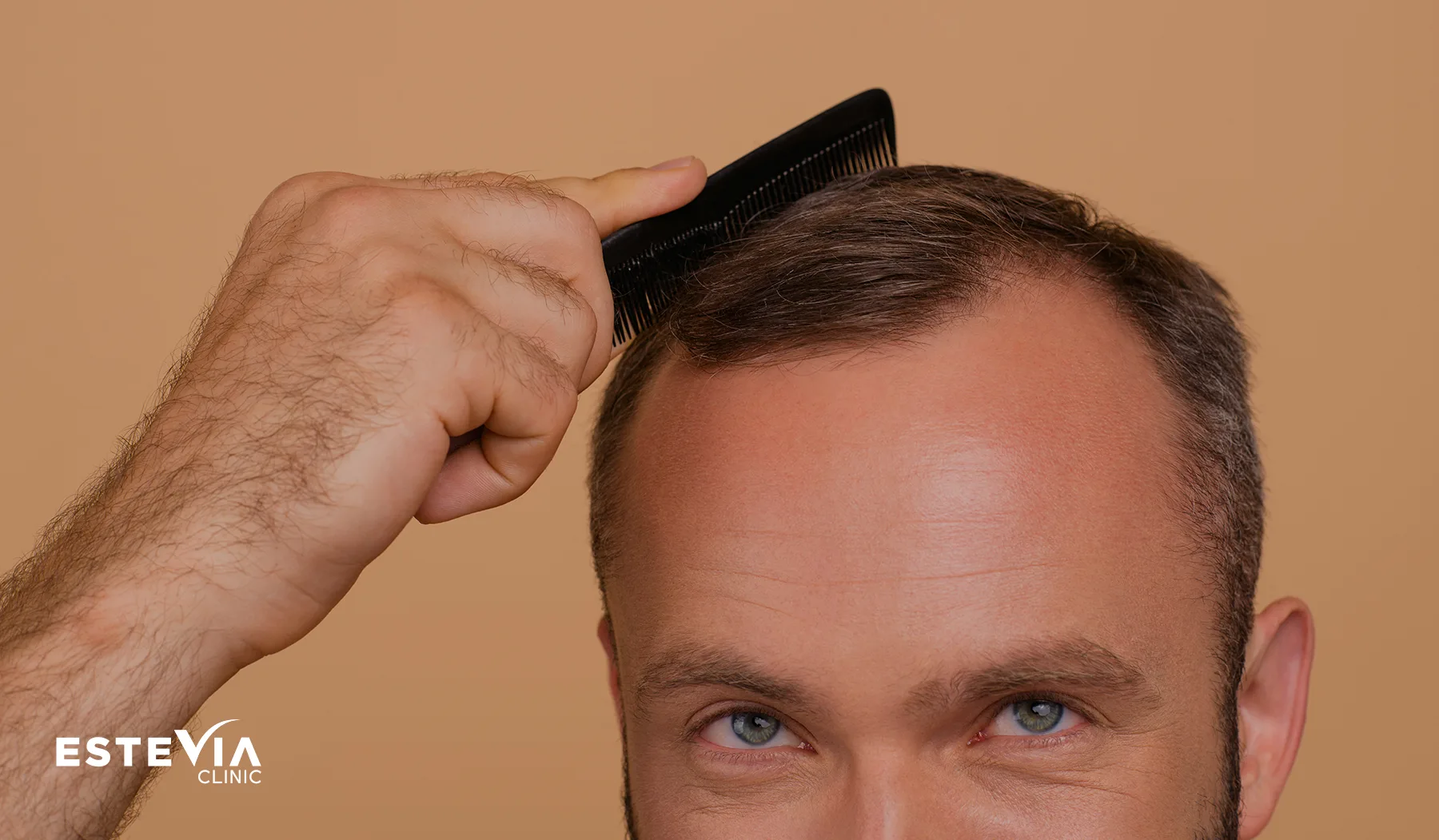

Recovery Process After Hair Transplant: Details for Sapphire FUE and DHI Methods
Nobody tells you enough about the weeks in between. Patients research the procedure itself obsessively, then show up around month three confused and slightly panicked because their hair looks worse than before surgery. That’s normal — and it’s the part almost nobody explains well, regardless of whether you had Sapphire FUE or DHI.
The first two weeks
In the first 24-48 hours, the donor and recipient areas are sensitive, with small scabs forming around each graft and some mild swelling or redness — this is the point where you really shouldn’t touch or scratch the area. Around day 3-7, gentle washing following the clinic’s instructions helps the scabs come off without disturbing the grafts underneath, and swelling typically fades during this window. By day 10-14, most scabs have naturally fallen away and the donor area has healed enough that most patients return to their regular routine. DHI patients sometimes notice slightly less trauma to the scalp at this stage, since the technique skips the step of pre-creating recipient-site incisions.
Weeks 3-4: the shedding phase
This is the part that catches people off guard. Somewhere between two and four weeks after the transplant, most of the newly placed hairs fall out. The follicle itself stays put under the skin — what you’re losing is just the hair shaft, not the graft. It looks alarming if you don’t know it’s coming, but it happens in the vast majority of cases and doesn’t mean anything went wrong.
Month 2-3: the quiet period
Arguably the hardest stretch psychologically, because visually almost nothing is happening. The follicles are resting, rebuilding their blood supply before starting a new growth cycle. This is the point where patients most often message the clinic asking if something went wrong — usually nothing did, it’s just biologically slow.
Month 3-6: real growth starts showing
Thin, often lighter-coloured or slightly curly hairs start appearing around month three or four — the first genuinely visible sign the transplant is working, even though coverage still looks patchy at this stage. By month five or six, hair thickens and darkens toward its natural texture, and this is usually when patients start feeling noticeably better about how things look.
Month 8-18: density and final shape
The hairline and overall density keep filling in through months eight to twelve, with most of the visible growth complete by month nine or ten — though the hair itself is still maturing in thickness and texture. Surgeons typically evaluate the “final” result somewhere between month twelve and eighteen: full density, natural texture, and the hair growing in its natural direction. Some patients notice subtle improvements in graft thickness even past the one-year mark.
A few things worth being upfront about: growth speed varies noticeably between patients depending on age, donor hair quality, and how closely the aftercare instructions were followed — avoiding strain, protecting the scalp from direct sun, staying hydrated and well-nourished all genuinely help. Smoking and poor sleep positioning in the first weeks can slow things down. And “shock loss,” where some of the patient’s original surrounding hair temporarily sheds too, is a real and documented side effect that almost always resolves on its own.
If there’s one piece of advice from this whole timeline: don’t judge the result at month three. That’s the single most common reason patients panic unnecessarily.


